
Gold-Impregnated Scaffolds Enable Biocompatible Cardiac Patch
By Chuck Seegert, Ph.D.
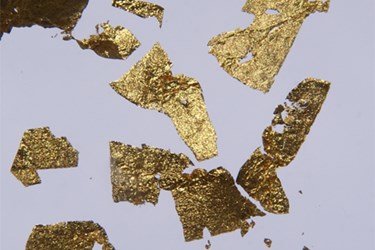
Researchers at Tel Aviv University (TAU) have found a way to get tissue engineered scaffolds to be more electrically conductive, a problem that has plagued cardiac tissue replacement after heart attacks. Scaffolds impregnated with gold particulates may prove to be a step forward in cardiac tissue engineering.
Having a heart attack is a serious matter because of the permanent damage the heart sustains. Cardiac muscle tissue contains few stem cells and, because the cardiac cells are so specialized, they cannot multiply and repair the tissue. From this standpoint, an engineered tissue replacement is ideal, and research is underway to achieve it. A challenge so far, however, has been that tissue engineered replacements are generally not efficient at electrical conduction.
"Our goal was twofold," said Dr. Tal Dvir, a professor at TAU's Department of Biotechnology, Department of Materials Science and Engineering, and Center for Nanoscience and Nanotechnology, in a recent press release. "To engineer tissue that would not trigger an immune response in the patient, and to fabricate a functional patch not beset by signaling or conductivity problems."
One approach to engineering cardiac tissue is cell-based. It involves taking cells from the patient and growing them on a scaffold, and eventually re-implanting the scaffold into the patient. To avoid immune reactions, the team suggested using an autologous graft from the patient’s own stomach as a scaffold material, according to the press release.
Another drawback to existing tissue engineering approaches is conductivity of the engineered replacements, since they do not readily conduct signals.
"Engineered patches do not establish connections immediately," said Dr. Dvir in the press release. "Biomaterial harvested for a matrix tends to be insulating and thus disruptive to network signals."
A possible solution developed by the team was recently published in a study in Nano Letters. Taking scaffolds from the omentum, the tissue structure that secures the intestines inside the abdominal cavity, the team decellularized it, impregnated it with gold nanoparticles, and cultured cells on the resulting construct. When compared to pristine scaffolds with no gold, the performance was greatly superior. According to the study, these gold-impregnated scaffolds showed a stronger contraction force, faster calcium transients, and a lower excitation threshold. These are all effects that are seemingly related to the electrical conductivity of the non-immunogenic gold nanoparticles.
Because of the challenges to healing, an engineered replacement to cardiac tissue would be a great benefit to medicine. Recently, another research team used a mouse model to study cardiac progenitor cells, a cell type that may be useful for cell-based cardiac tissue approaches.
Image Credit: “Gold Flakes,” Jurii, 2009. CC BY 3.0: http://creativecommons.org/licenses/by/3.0/deed.en