
3D, Brain-Like Tissue Survives In Culture For Months
By Chuck Seegert, Ph.D.
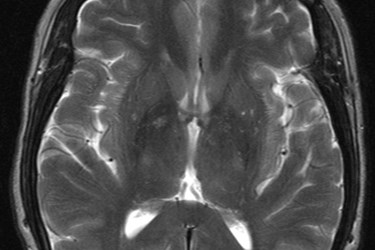
An interesting 3D brain model with tissue-like properties has been developed by researchers at Tufts University. The tissue could provide an alternative to animal studies and serve as a viable in vivo experimental platform for studying the brain.
In the August 11 early online edition of the journal Proceedings of the National Academy of Sciences (PNAS), a team at the Tufts University Tissue Engineering Resource Center, which is funded by the National Institute of Biomedical Imaging and Bioengineering (NIBIB), reported their 3D brain-like model that can survive in culture for over two months.
"This work is an exceptional feat," said Rosemarie Hunziker, Ph.D., program director of tissue engineering at NIBIB, in a recent press release. "It combines a deep understanding of brain physiology with a large and growing suite of bioengineering tools to create an environment that is both necessary and sufficient to mimic brain function."
Until now, researchers have grown neurons on flat, 2D surfaces like petri dishes, allowing for experiments to be run that focus on neuronal behavior in a controlled way. Unfortunately, however, neurons are better-suited for a natural, 3D environment. This means that their behavior on a 2D surface does not accurately reflect what would normally be seen in their native tissue.
In the case of neurons, their native tissue is the grey and white matter of the brain. Grey matter is primarily composed of the neuronal cell bodies, while long cellular projections called axons form the white matter.
In the past, attempts to mimic this complex environment using 3D collagen gels have allowed neurons to form networks of connections with each other, but those attempts have had several limitations. Generally, these gel cultures are short-lived, and their composition is fairly uniform.
According to the results published in PNAS, the 3D, brain-like tissue model exhibits a grey matter region and a white matter region that was created using two different types of scaffold materials. A doughnut-shaped outer ring was made from a spongy silk protein, while the central hole of the doughnut was filled with the softer, collagen-based gel material. Seeding the outer ring with neurons allowed the cells to firmly anchor to the denser silk proteins. The neurons in the outer ring then sent axons were through the collagen at the center, connecting with axons from cells across the ring.
This resulted in a center mass primarily composed of axons, which mimicked the white matter of the brain, and an outer section of neurons that operated as grey matter.
These cell-laden constructs were capable of surviving for several weeks in culture. During that time, they were studied to gauge their response when subjected to trauma similar to that seen in a brain injury. When weights were dropped from varying heights and changes to electrical and chemical activity were observed, the researchers noted that responses were similar to the results of animal studies performed to evaluate traumatic brain injury.
"With the system we have, you can essentially track the tissue response to traumatic brain injury in real time," said David Kaplan, Ph.D., Stern Family Professor of Engineering at Tufts University, in the press release. "Most importantly, you can also start to track repair and [see] what happens over longer periods of time."
Developing 3D tissue models is an ongoing area of research for many different tissue types, including liver and fat tissues. The benefits of these models are wide-reaching and continue to be sought as they may allow more rapid and accurate development of drug treatments.
Image Credit: "MRI T2 Brain axial image." Afiller. CC BY-SA 3.0: http://creativecommons.org/licenses/by-sa/3.0/