
Beyond Connectivity: Where Digital Technologies Create Real Value In Drug Delivery
By BioPhorum
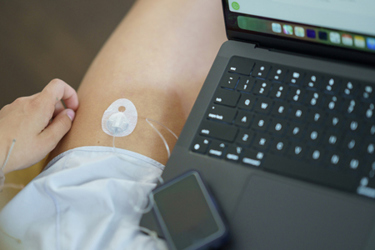
Digital technologies have transformed almost every aspect of modern life, and healthcare is no exception. Connected devices, mobile applications, wearable sensors, and advanced analytics offer significant opportunities to improve patient outcomes, generate valuable insights, and support more effective healthcare delivery. Yet despite considerable investment and enthusiasm, success has been uneven, particularly in the field of drug delivery.
The challenge is not simply adding connectivity. Rather, it is understanding where digital technologies can solve real problems for patients, healthcare providers, and industry, while avoiding unnecessary complexity. As healthcare becomes increasingly interconnected, organizations must focus on creating meaningful value through integrated ecosystems, patient-centered design, and data-driven decision-making.
This article explores the opportunities and limitations of digital health technologies in drug delivery and examines where the strongest evidence for success is emerging.
The Promise Of An Integrated Digital Health Ecosystem
The future of digital healthcare lies in creating a fully integrated ecosystem that combines treatment, devices, and (mobile) apps, together with data analytics. A complete ecosystem is what is needed to unlock insights from a patient’s — and a population of patients’ — data to bolster R&D efforts, shorten time to market, and make future better treatments more likely. This, perhaps, is analogous to the mobile phone example: by bringing together a range of apps under a single (or a couple of) ecosystems, the adoption of smartphones accelerated to the point of near ubiquity.
To achieve this, all tools – such as drugs, devices, patient apps, and data analytics — need to be fully integrated into a single ecosystem. If not delivered by one provider, pharmaceutical companies can waste a significant amount of time, resources, and money and are faced with huge coordination efforts to develop and maintain such an ecosystem.1
The appropriate use of digital health takes the following dimensions into consideration: health promotion and disease prevention, patient safety, ethics, interoperability, intellectual property, data security (confidentiality, integrity, and availability), privacy, cost-effectiveness, patient engagement, and affordability. It should be people-centered, trust-based, evidence-based, effective, efficient, sustainable, inclusive, equitable, and contextualized. The growing global challenge of digital waste on health and the environment must also be appropriately managed.2
Moreover, data indicate that mHealth developers need to consider gamification strategies to sustain user commitment, as well as psychological variables, such as intrinsic motivation. Gamification of health apps is a promising approach to counteract the often-decreasing long-term motivation of health app users and is essential for promoting continued use.3
Bridging The Digital Divide
The advent of wearables and smart technology has given birth to a host of innovative players that have revolutionized health tracking. Devices ranging from Whoop and Apple Health to Strava provide fitness tracking. Meanwhile, diet plans and advice, such as My Fitness Pal, Noom, and WW (formerly Weight Watchers) enable people to derive insights and monitor in real time. However, it takes a lot of time, expense, focus, and motivation. Many of the apps are also aimed at a wealthier and more motivated subset of the population, while health inequalities stand at starker levels than ever.
So, how can digital technology help take the burden from us, with a focus more on prevention than cure? How can this be pointed toward what will make the greatest difference to the greatest number of people?
Achieving this vision will require:4
- specific individual health profiles
- highly tailored health regimes
- connected personalized health insights
- accessible user-owned data structures.
An estimated 1.1 billion people worldwide used wearables in 2022, which is expected to increase further and help in offering global healthcare cost savings of $200 billion in the near future. As wearables grow in popularity, the devices are witnessing drastic changes in their form and making them an intricate part of our daily lives.5
Digital technologies have the potential to revolutionize drug delivery devices, but their success depends on addressing real patient needs and ensuring interoperability with broader healthcare systems. By adopting a patient-centric approach and learning from successful consumer technologies, the healthcare industry can harness the full potential of digital solutions.
Why Many Connected Drug Delivery Products Fail
When seeking value for applying digital technologies in drug delivery devices, and looking beyond the poster child that is diabetes care, most initiatives struggle to find their niche and fail before they even launch.
Digitally connected devices might be considered non-value-add as they do not drive or direct decision-making, don’t create information allowing the reduction of risk, or remove meaningful friction for patients or users (in some use cases, they may be even adding new hurdles to overcome).
Evidence from bio/pharma and other industries shows that digital value is realized when connectivity is selective, decision‑led, and (in many cases) invisible to the patient. Successful models must emphasize the benefit, which is specific to the user and their context (for example: event confirmation, uncertainty reduction, quality improvement, and service integration rather than basic continuous monitoring or glitzy feature‑led additions).
For combination products, the strongest value propositions typically sit upstream from the end user (think development, human factors evidence, quality surveillance) or around using the therapy (training, support, logistics), rather than inside the dosing step itself. Diabetes continues to be cited as the reason why there is value in this space. Diabetes care, though, remains a unicorn: it benefits from continuous feedback, facilitating dose variability, and closed‑loop control. This is as close to a unique scenario as we see in our industry.
The practical approach is to hold back on introducing connected features until there is certainty that the technology can positively – and easily — alter outcomes for users and patients.

Where Digital Technologies Are Delivering Value
It’s not all doom and gloom. There are glimmers of hope out there, and value is being added to the overall drug delivery experience through judicious application of connected technologies.
Connected inhalers is an area where positive patient outcomes have come from the introduction of digital tools. Examples from Teva6 and Propeller7 have led to improvements in adherence, linked with better asthma control and concomitant reductions in the need for rescue remedies and hospitalizations.
In these examples, we see technology being applied to (i) the real-life problem of poor adherence, (ii) the clear clinical end goal of improved treatment effectiveness, and (iii) friction-free adoption. Simple solutions to simple (but not easy) challenges.
Clinical trials are also beginning to see benefits from the inclusion of connected technologies, though this flips some traditional thinking on its head. Here the value is not necessarily directly for the patient, but for industry.
Applying connected technologies in clinical trials could open the door to a range of previously challenging benefits.8 For example, self-reported patient diaries with remotely triggered/recorded dosing events, direct measurement of dosing accuracy/completion, and effectively removing patient errors can help researchers understand if issues arise from user error or device failures. Non-adherence is more easily tracked and quantified.
Data already supports the concept of technologies in clinical trials improving patient recruitment and retention, reducing operational burdens, supporting remote monitoring,9 and greatly improving data collection without the need for lengthy in-clinic stays.
By more accurately identifying how, where, and when patients are using a drug delivery device, industry can reliably benefit from decentralized clinical trials, remote data collection, and even using wearables and connected devices.10,11
References:
- Seiler S, Dobrev V, “Digital Self-Care – Solving Patient Challenges While Delivering Robust Therapy Data to Pharma”. ONdrugDelivery, Issue 162 (Jun 2024), pp 38–41. https://www.ondrugdelivery.com/digital-self-care-solving-patient-challenges-while-delivering-business-insights-to-pharma/
- Global strategy on digital health 2020-2025. Geneva: World Health Organization; 2021. https://iris.who.int/bitstream/handle/10665/344249/9789240020924-eng.pdf
- Mustafa AS, Ali N, Dhillon JS, Alkawsi G, Baashar Y. User Engagement and Abandonment of mHealth: A Cross-Sectional Survey. Healthcare (Basel). 2022 Jan 24;10(2):221. doi: 10.3390/healthcare10020221. PMID: 35206837; PMCID: PMC8872344. https://www.ncbi.nlm.nih.gov/pmc/articles/PMC8872344/
- Prevention revolution: How digital tools can help us get ahead of health problems Stephen Firth 1 May, 2024 https://pharmaphorum.com/digital/prevention-revolution-how-digital-tools-can-help-us-get-ahead-health-problems
- Next generation wearables set to transform patient care Neeraj Nitin Jadhav | Apr 29, 2024 https://insights.omnia-health.com/technology/next-generation-wearables-set-transform-patient-care
- ADDING MULTIMEDIA Teva Announces FDA Approval of First and Only Digital Inhaler with Built-In Sensors – P
- Propeller® - Digital Therapeutics Alliance
- Data-Driven and Technology-Enabled Trial Innovations Toward Decentralization of Clinical Trials: Opportunities and Considerations - Mayo Clinic Proceedings
- Decentralized Clinical Trials in the Era of Real‐World Evidence: A Critical Assessment of Recent Experiences
- The Digitization and Decentralization of Clinical Trials - Mayo Clinic Proceedings
- Remote Monitoring and Data Collection for Decentralized Clinical Trials | Health Policy | JAMA Network Open | JAMA Network