
FDA Approves Bayer's New Labeling For Essure, Wraps Up Complaint Investigation
By Jof Enriquez,
Follow me on Twitter @jofenriq

The US Food and Drug Administration (FDA) says it has approved Bayer’s updated labeling for its Essure birth control implant, and has closed a complaint against the company lodged by patients who alleged that they were harmed by the device.
"The FDA approved Bayer’s labeling which is consistent with the recommendations in the final guidance," the regulator states in the Essure Labeling Information web page. "The FDA expects Bayer to make the updated Essure product labeling available within 30 days following the FDA’s approval decision. A link to the new, approved labeling will be provided on this website as it becomes available on Bayer’s website."
The actual label is not available yet, but FDA spokesperson Angela Stark told Regulatory Focus that the language of the box warning in the approved label is identical to an example provided in the agency's final guidance released on October 31, 2016.
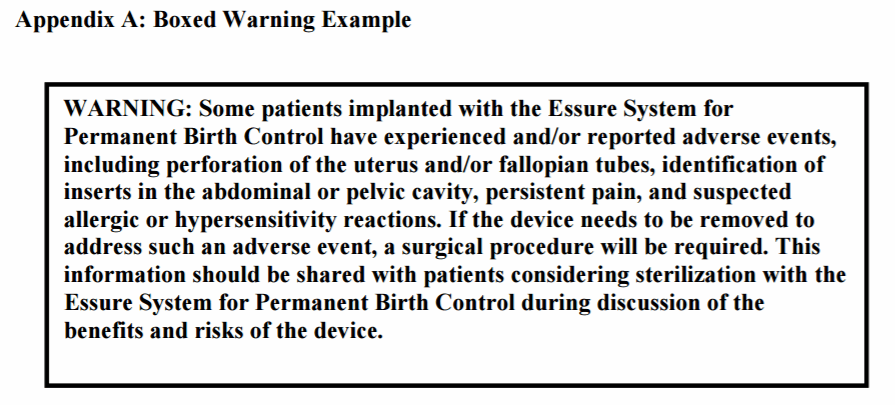
After weighing recommendations from its Obstetrics and Gynecology Devices Panel of the Medical Devices Advisory Committee, which convened in September 2015, FDA in February proposed a boxed warning for Essure to better inform women about the risk of adverse events they could experience after being implanted with the pair of metal coils, inserted into the fallopian tubes, reports Medscape.
FDA also acted on a citizen petition filed by hundreds of women who have sued Bayer. Stark told Regulatory Focus that FDA now has wrapped up its probe, following a review of Essure's labeling and "inspections of Bayer, including surveillance of ongoing clinical investigations related to the Essure device, to ensure that the manufacturer was complying with FDA's laws and regulations."
In addition to the new boxed warning, Essure will come with a patient decision checklist, which provides key information about the device, its use, and safety and effectiveness outcomes, of which the patient should be aware and discuss with her doctor as she considers her sterilization options, according to EIN News. Bayer reportedly also modified patient counseling and device removal sections of the labeling to provide physicians with additional guidance in these critical areas.
In the final guidance, FDA states that both these labeling components — a boxed warning and a patient decision checklist — "will help to ensure a woman receives and understands the benefits and risks associated with her contraceptive options so that she can make an informed decision as to whether a permanent hysteroscopically-placed tubal implant intended for sterilization is the right choice for her."
However, FDA clarifies that labeling components for permanent, hysteroscopically-placed tubal implant devices need not be limited to a boxed warning and a patient decision checklist. It says last month's guidance should complement more comprehensive guidance for effective medical device labeling.