
HHS Inspector General Urges CMS To Include UDIs In Revised Claim Forms
By Jof Enriquez,
Follow me on Twitter @jofenriq
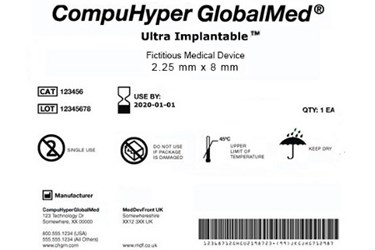
Daniel R. Levinson, the Department of Health and Human Services (HHS) Inspector General, encouraged anew the Centers for Medicare and Medicaid Services (CMS) to follow through with efforts to include unique device identifiers (UDIs) in health insurance claim forms, of which new versions are to be proposed on Dec. 1, 2016.
Because current claim forms only contain procedures performed and a seldom-used field for device failures or recalls, Levinson wrote in a letter addressed to CMS Acting Administrator Andrew M. Slavitt that it has become increasingly difficult to monitor how much Medicare pays for defective or recalled devices, which have doubled in number from 2003 through 2012.
When questioned by Senators Elizabeth Warren (D-MA) and Charles Grassley (R-IA) last year, Levinson was unable to come up with exact figures for how much Medicare had spent on failed or recalled devices, but estimated the figure was likely in the billions, according to the Regulatory Affairs Professional Society (RAPS).
Since then, and in order to come up with its own preliminary report, Levinson wrote that HHS had to perform complex audit procedures and a time-consuming process to obtain medical records to identify $5.1 billion in Medicare payments to providers, and $501 million in beneficiary copayments and deductibles related to replacements and related services for seven cardiac devices implanted into 72,710 Medicare beneficiaries.
"Our ongoing review shows that the lack of medical device-specific information in the claims data impedes the ability of the Centers for Medicare & Medicaid Services (CMS) to readily identify and effectively track Medicare’s total costs related to the replacement of recalled or defective devices," Levinson wrote. "Inclusion of the DI portion of the UDI on claim forms would be an important step in the identification of the model and manufacturer of an implanted device."
Levinson acknowledged a co-signed letter by FDA and CMS sent in July to the Accredited Standards Committee X12 supporting the inclusion of the device identifier (DI) portion – which identifies the device labeler and the specific version or model of the device – of the UDI on the claim forms. According to Slavitt and FDA Commissioner Robert Califf, UDI numbers would allow researchers to study device performance over time, quickly identify safety issues associated with the device, and allow payers to calculate value-based reimbursement.
"We suggest that CMS collaborate with the Accredited Standards Committee X12 to include the DI on the next version of the claim forms to assist in identifying the costs to Medicare for recalled or defective medical devices, help ensure patient safety, and safeguard Medicare trust funds," Levinson reiterated in his own letter to Slavitt.
He also suggested that future claim forms should eventually not only contain device identifier information, but also production identifier (PI) data, which identifies the device’s lot or batch, its serial number, its expiration date, its manufacturing date, or its HCT/P (Human Cell, Tissue or Cellular or Tissue-Based Product) identification code.
Medtech association AdvaMed backs the development of medical device identification but says integrating them in billing records remains a “challenging and complex proposition” that needs to be evaluated further to ensure it is practical, the Wall Street Journal reported previously.