
Kid-Safe Battery Coating Protects Against Accidental Ingestion
By Chuck Seegert, Ph.D.
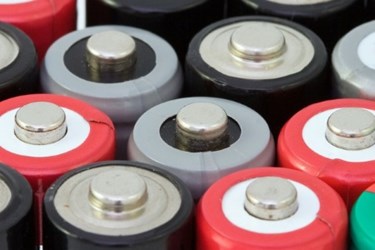
A new coating can make batteries water proof and act as an insulator in case they are accidentally swallowed. If ingested, uncoated batteries, like those currently on the market, require a trip to the emergency room and potential surgery.
Small batteries, like those used in watches and hearing aids, are beginning to proliferate as more devices find use for their compact size. Recent legislation has required that toys and other items that children come into contact with have childproof measures — like screws on the battery access ports. Unfortunately, however, there are many adult devices that children may have access to that do not include these protective mechanisms.
In 2009, before legislation was introduced, 3,461 cases of pediatric battery ingestion were reported. By 2013, after the legislation, there were 3,366 cases reported, which may indicate that the measures taken were not effective, according to a recent study from Brigham and Women’s Hospital (BWH) that was published in the Proceedings of the National Academy of Sciences.
"We set out to create a specialized coating that could switch from an insulator to a conductor when subjected to pressure," said co-author Robert Langer, Institute Professor from the Harvard-MIT Division of Health Sciences and Technology, in a recent press release from BWH.
The solution from the team involves a coating that renders the battery inert when it isn’t seated in the housing of its device, according to the press release. The coating is based on touch screen technology and uses a quantum tunneling effect that allows current to pass through it when it is under pressure. Placing the batteries into their compartments with a spring that presses down on them leads to standard battery performance. But, when removed, the coating becomes an insulator for the battery.
In the study, the scientists showed that by coating the negative side of the battery, it significantly reduced tissue damage in a large animal model. The coating is also very thin and will likely require no changes to existing devices that use them. It is also very low cost.
"The ultimate cost will depend on the exact composition of the material that is used, but for our current formulation, we're talking cents, not dollars," said Bryan Laulicht, Ph.D., a postdoctoral fellow and the first author of the study, in the press release.
Some batteries can be permanently placed in their devices and charged remotely using magnetic induction, according to a recent article on Med Device Online. This could potentially eliminate the need for removable batteries, while also enabling implanted batteries to be recharged.