
University Of Muenster Completes Certification Program By Implanting Its First CardioWest Temporary Total Artificial Heart
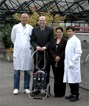
 Muenster, Germany - Two months after being implanted with a Left Ventricular Assist Device (LVAD) to support his dying heart, Mike Gadiel's heart began to fail again. On June 22, surgeons at University of Muenster saved his life by removing both the LVAD and his dying heart, and implanting their first CardioWest temporary Total Artificial Heart (TAH-t).
This implant marked University of Muenster's completion of the CardioWest artificial heart certification program, started in 2006. The CardioWest artificial heart is the world's first and only FDA and CE approved temporary artificial heart. It replaces both the left and right ventricles and pumps up to 9.5 liters per minute, which is more than any other approved device. University of Muenster is the 12th hospital in Europe and the 22nd in the world to become certified to implant the CardioWest artificial heart.
"Because of our CardioWest certification training, we were able to save a patient's life who otherwise would have been out of options," said Prof. Dr. Hans Scheld, head of the cardiothoracic department. "When it has been determined that a patient's heart needs to be replaced, they need a matching donor heart. If one is not immediately available, the best solution for larger patients is the CardioWest temporary Total Artificial Heart."
Gadiel was discharged on Sept. 1 from University of Muenster to wait for a donor heart at home. Since July 16, 2006, stable CardioWest patients in Europe have been able to recover at home thanks to the CE approved portable driver. With the driver, many patients are able to shop, travel and visit with friends. SynCardia Systems, Inc., manufacturer of the CardioWest artificial heart, is currently working with the FDA to address the need for a discharge driver in the U.S.
The CardioWest artificial heart is approved as a bridge to transplant for patients dying from end stage biventricular failure. These patients are often days, if not hours from death. Their survival depends on receiving a donor heart, or a CardioWest artificial heart as a bridge to transplant.
In the pivotal clinical study of the CardioWest artificial heart, published in the New England Journal of Medicine , 79 percent of patients receiving the artificial heart survived to transplant, the highest survival rate for any heart device in the world.
SOURCE: University Of Muenster