
When Software Becomes Part Of The Medicine
By Andrey Meshcheryakov, Recombinators
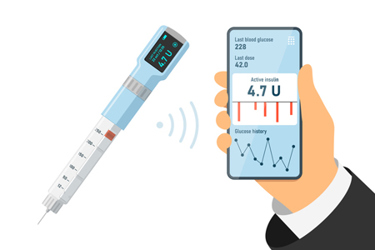
In modern combination products, software is no longer a thin adherence layer sitting on top of a drug or device. It is increasingly part of the therapeutic mechanism itself – capturing behavior, interpreting physiology, adjusting delivery, and shaping what the drug can actually achieve in the real world. FDA’s 2023 Prescription Drug Use-Related Software (PDURS) draft guidance reflects that same reality by treating certain sponsor-backed software outputs as part of the regulated drug-labeling universe rather than as mere add-ons.1,2
Software In Diabetes Care
The first and strongest case study is automated insulin delivery. Systems such as Tandem’s Control-IQ connect a continuous glucose monitor, an insulin pump, and predictive software that adjusts basal insulin and can trigger correction boluses based on forecast glucose trends.
Real-world analyses show time in range rising from 64% to 74% among Medicare users and from 46% to 60% among Medicaid users, alongside improved glucose management indices.3 This matters because software is not simply reminding a patient to take insulin; it is continuously translating live biometric data into dose changes, an accurate and efficient measure that a human would struggle to calculate with the same speed and consistency. The deeper lesson is that adherence in these systems shifts from “Did the patient remember?” to “Did the patient remain connected to an adaptive control loop?”
A second diabetes case shows a different kind of power: not automation of delivery but radical visibility into adherence. Smart insulin pens such as Novo Nordisk’s NovoPen 6 and Echo Plus record the exact time and size of injections and connect those logs to glucose data.
Multinational real-world evidence shows that patients missed, on average, 0.2 basal doses and 6.0 bolus doses per 14 days, and that even one missed basal dose or one missed bolus dose was associated with measurable declines in time in range. Missing two basal doses or four bolus doses pushed time in range down by more than 5%.4
This showcases the point at which software stops being a diary and becomes a causal instrument. It lets clinicians see which missed behaviors matter most, when they happen, and what physiological damage follows. That makes education, titration, and coaching far more precise than the old language of “noncompliance.”
Software In Respiratory Disease
Respiratory care offers an equally important lesson: the barrier is not only whether patients use the device but whether they use it correctly. Digital Therapeutics Alliance’s Propeller platform pairs inhaler sensors with software that tracks date, time, and patterns of use. This intel then feeds reminders and insights back to patients and clinicians.
Propeller has demonstrated a 58% increase in medication adherence, a 78% reduction in rescue inhaler use, and a 63% increase in asthma control, with additional studies reporting reductions in asthma- and COPD-related emergency department visits and hospitalizations.5 Rescue inhaler overuse is a signal of poor control, so software turns inhaler telemetry into an early-warning system for worsening disease.
Inhalers expose an even deeper truth about efficacy: a patient can be perfectly adherent on paper and still receive poor treatment if the technique is wrong. Platforms such as Aptar’s HeroTracker Sense aim to assess coordination between actuation and inhalation, inspiratory flow, and breath-hold.6
The 2025 Journal of Medical Internet Research (JMIR) review notes that many patients struggle with correct inhaler technique and that electronic inhaler monitoring devices can improve both adherence and technique while also creating friction around trust, stress, privacy, cost, and troubleshooting.7 In other words, software changes not only whether therapy is taken but whether the drug physically reaches the target tissue, a much more consequential lever than reminders alone.
Software Defines Real-World Efficacy
One of the most underappreciated implications is methodological. Once software improves adherence, optimizes technique, or dynamically adjusts dosing, the observed efficacy of the product no longer belongs to the molecule alone.
Nudges and algorithmic interventions can inflate engagement in trials and complicate causal interpretation. That matters commercially and clinically. It affects how label claims are justified, how payers judge value, and how competitors should think about differentiation. The winning combination product is no longer simply the one with the best drug or the most elegant hardware. It is the one that closes the loop fastest between sensing, interpreting, and acting.

Software creates value through three mechanisms at once:
- Reduces missed use
- Corrects poor use
- Enables timely use or dose adjustment
In diabetes, it can become an autonomous titration engine. In respiratory disease, it can become both a behavior monitor and a delivery-quality monitor. And across categories, it upgrades a drug-device pair into a living therapeutic system. The strategic consequence is profound: in the next generation of combination products, software enablement will not just improve adherence metrics, it will increasingly define real-world efficacy itself.
References:
- Will PDURS Help Pharma Deliver the “Beyond the Pill” Promise? https://www.iqvia.com/locations/united-states/blogs/2026/05/will-pdurs-help-pharma-deliver-the-beyond-the-pill-promise
- FDA Publishes Draft Guidance Outlining Its Regulatory Approach to Prescription Drug Use-Related Software https://www.ropesgray.com/en/insights/alerts/2023/09/fda-publishes-draft-guidance-outlining-its-regulatory-approach-to-prescription-drug-use
- Real World Evidence Supporting Tandem Control-IQ Hybrid Closed Loop Success in the Medicare and Medicaid Type 1 and Type 2 Diabetes Populations https://www.researchgate.net/publication/361616102_Real_World_Evidence_
Supporting_Tandem_Control-IQ_Hybrid_Closed_Loop_Success_in_the_Medicare_and_Medicaid_Type_1_and_Type_2_
Diabetes_Populations - Association Between Treatment Adherence and Continuous Glucose Monitoring Outcomes in People With Diabetes Using Smart Insulin Pens in a Real-World Setting https://diabetesjournals.org/care/article/47/6/995/154412/Association-Between-Treatment-Adherence-and
- Trends in Respiratory Care – Digital Innovations Shaping the Future of Respiratory Health https://www.futurebridge.com/whitepaper/trends-in-respiratory-care-digital-innovations-shaping-the-future-of-respiratory-health
- HeroTracker® Sense – digital solution for respiratory medicine https://aptar.com/en-us/products/pharmaceutical-herotracker-sense-a-smart-healthcare-solution-for-digital-respiratory-medicine
- Experience of Using Electronic Inhaler Monitoring Devices for Patients With Chronic Obstructive Pulmonary Disease or Asthma: Systematic Review of Qualitative Studies https://pubmed.ncbi.nlm.nih.gov/40378281/
About The Author:
 Andrey Meshcheryakov is the head of Ways to Win Practice at Recombinators | 2x Inc. 5000 company. As a consultant, he works with global F500 pharmaceutical companies and emerging biotech leaders. As a reviewer and a judge, Andrey helped identify winning teams in two Hult Prize Boston events and the MIT IDEAS Social Innovation Challenge. As a team coach, he guided over 300 advanced degree students (from Harvard, Stanford, INSEAD, etc.) in open innovation competitions. Andrey advises startup founders and managing teams on strategy, innovation, and growth.