
The Mold Is Only Half The Story
Brett Saddoris, Technical Marketing Manager, Accumold
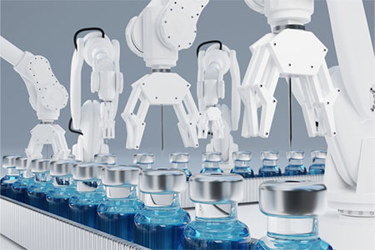
In micro molding, automation is far more than robotics on the factory floor—it is the manufacturing architecture that enables quality, scalability, and repeatability. While conventional molding programs may add automation later, micro molding demands a different approach: designing automation, inspection, and packaging into the process from the start.
At micro scale, tiny components can cling due to static, shift during handling, or become damaged by seemingly insignificant contact. As a result, part handling becomes a quality function, not simply logistics. Reliable manufacturing requires systems that control orientation, protect critical features, and maintain consistency from molding through packaging.
This article explores why automation must be considered during design and DfMM discussions, especially for high-volume medical, optical, and sensing applications. Topics include vision inspection strategies built around critical-to-quality (CTQ) features, automated insert molding, and packaging solutions that preserve cleanliness, orientation, and downstream assembly performance.
The discussion also highlights how mature micro molding organizations integrate automation with tooling, quality, and production rather than treating it as an afterthought. By engineering the entire manufacturing system—from insert placement and inspection to packaging and scale-up—OEMs can reduce risk and improve yield.
As micro devices become smaller and production volumes grow, success will increasingly depend not on making a perfect part once, but on manufacturing millions of identical parts reliably. The future belongs to system builders who design for repeatability, inspection, and scalability from the very beginning.
Get unlimited access to:




Enter your credentials below to log in. Not yet a member of Med Device Online? Subscribe today.